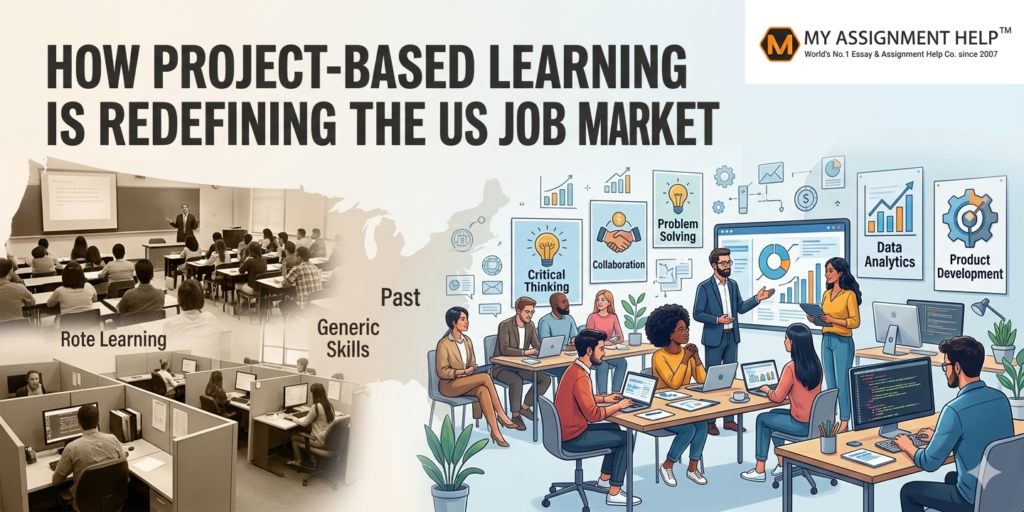
The American landscape of higher education and professional recruitment is undergoing a seismic shift. For decades, the “gold standard” of a student’s capability was the high-stakes exam or the cumulative GPA. However, as we move through 2026, the US labor market—led by tech giants in Silicon Valley and financial hubs in New York—is signaling a preference for a different kind of proof: Project-Based Learning (PBL).
PBL is an instructional methodology that encourages students to learn and apply knowledge and skills through an experience-based pathway. Instead of memorizing formulas for a mid-term, students are tasked with solving real-world problems, such as designing a sustainable urban garden or developing a functional app. This shift is not just academic; it is a direct response to a workforce that demands “day-one readiness.”
The Rise of the “Portfolio Employee”
In the current US economy, recruiters are increasingly looking past the degree and toward the portfolio. According to recent industry surveys, nearly 65% of hiring managers in STEM and creative sectors prioritize project evidence over traditional transcripts. They want to see the “how” and the “why” behind a solution. This transition has placed an immense amount of pressure on students to produce high-quality, industry-grade outcomes while managing a full course load.
When the stakes of these assignments are this high, the margin for error disappears. Students often find themselves navigating complex software, data analysis tools, and case study frameworks that require professional-level execution. In such high-pressure environments, many students choose to do my project for me through expert consultation to ensure their final submission mirrors the technical rigor expected by top-tier US employers. By collaborating with specialists, students can bridge the gap between classroom theory and the sophisticated project standards required to land a competitive internship or entry-level role.
Data-Driven Insights: Why PBL Matters
The shift toward PBL is backed by significant data regarding student retention and employment success:
- Retention Rates: A study by the Buck Institute for Education found that students engaged in PBL retain information up to 40% longer than those in traditional lecture-based environments.
- Skill Acquisition: The World Economic Forum’s Future of Jobs Report highlights that “Complex Problem Solving” and “Critical Thinking” remain the top two skills sought by US employers—both of which are the primary pillars of project-based work.
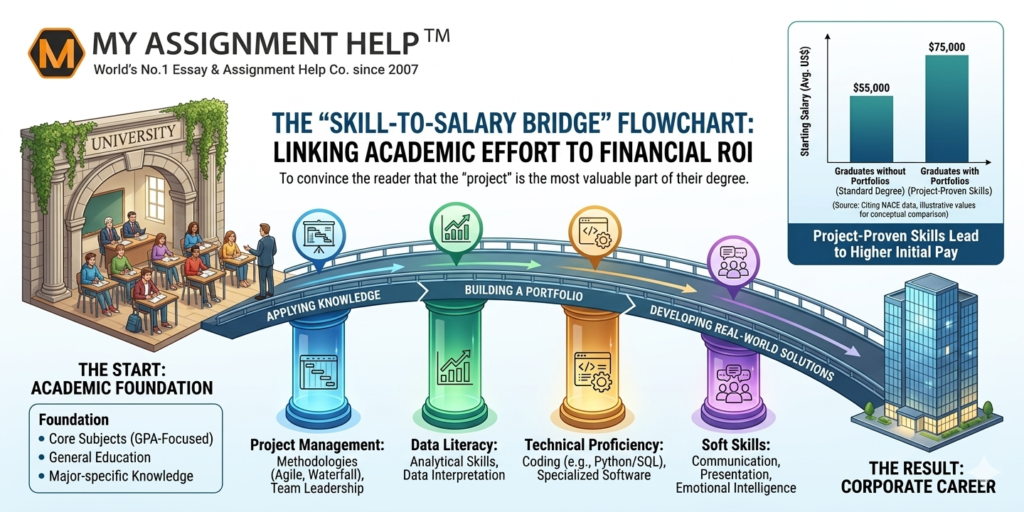
- Salary Impact: Data from the National Association of Colleges and Employers (NACE) suggests that graduates who can demonstrate project leadership during their degree earn an average starting salary 12-15% higher than those without a portfolio.
EEAT in Action: The Quality Standard for Modern Projects
In the digital age, Google’s EEAT (Experience, Expertise, Authoritativeness, and Trustworthiness) guidelines aren’t just for SEO—they have become the standard for how we evaluate information and academic output. When a student submits a project today, it is often published on digital platforms or shared in professional networks. Therefore, the content must be:
- Experience-led: Reflecting real-world application.
- Expert-vetted: Backed by credible data and peer-reviewed sources.
- Authoritative: Cited with precision and accuracy.
For international students studying in North America, maintaining these standards across different regional requirements can be daunting. Navigating the specific academic nuances of different regions requires localized expertise. For instance, those studying in Canadian institutions often seek a dedicated assignment help service to ensure their work adheres to specific regional grading rubrics and linguistic standards, which differ slightly from the US model.
Key Takeaways for 2026 Graduates
- Show, Don’t Just Tell: Your resume should link to a digital portfolio or GitHub repository showcasing completed projects.
- Interdisciplinary is King: The most valuable projects are those that combine two fields, such as “Data Analytics in Healthcare” or “Ethics in AI.”
- Focus on Soft Skills: Projects are the best way to prove you can collaborate, manage time, and handle conflict.
- Seek Mentorship: Don’t hesitate to use professional academic services to refine your project’s logic and presentation.
Managing the Project Load: A Strategic Approach
To succeed in a PBL-heavy curriculum, students must adopt a project management mindset. This involves:
- Deconstruction: Breaking a 20-page project into five 4-page milestones.
- Resource Allocation: Identifying which parts of the project require primary research and which require technical formatting.
- Quality Control: Utilizing professional editing and proofreading to ensure the final product is “employer-ready.”
FAQ Section
Q: Why is project-based learning becoming more popular than exams?
A: Exams measure rote memorization, whereas projects measure application. In a world where information is instantly accessible via AI, employers value the ability to apply that information to solve a unique problem.
Q: How do I choose a project topic that will help my career?
A: Look for “pain points” in your target industry. If you are a marketing major, a project on “Optimizing Ad Spend using Predictive Analytics” is far more valuable than a general essay on advertising history.
Q: Is it ethical to seek help with my academic projects?
A: Yes, seeking mentorship and professional guidance is a standard practice in the professional world (referred to as consulting). Using academic services for research, formatting, and structural guidance helps students learn the “professional standard” for high-level documentation.
Author Bio
Sarah Jenkins is a Senior Content Strategist at MyAssignmentHelp. With over a decade of experience in the US EdTech sector, Sarah specializes in bridging the gap between academic theory and workforce demands. She has mentored thousands of students on navigating the complexities of STEM projects and holds a Master’s degree in Educational Leadership from NYU.
References & Sources
- National Association of Colleges and Employers (NACE). (2025). “Job Outlook 2026: The Power of Portfolio Hiring.”
- Buck Institute for Education (PBLWorks). “The Impact of Project-Based Learning on Long-term Knowledge Retention.”
- World Economic Forum. “The Future of Jobs Report 2024/2026.”
- US Department of Education. “Reimagining the Role of Technology in Education: Project-Based Standards.